


2026 Honda Prologue: Short Pump Service & Repair Guide
Quick Answer: Servicing a Prologue in Richmond
The Prologue skips the oil-change routine entirely — no engine oil, no timing belt, no spark plugs — but it isn’t maintenance-free: tire rotations, cabin air filter swaps, brake fluid, and coolant-loop checks for the battery and motor thermal system stay on the schedule. Honda hasn’t published a Prologue-specific “first service at X miles” chart the way it has for the gas lineup, so the in-vehicle maintenance indicator and your selling dealer’s guidance are the source of truth rather than a printed interval sheet. Every Prologue carries the same coverage backbone as the rest of the lineup — Honda’s 3-year/36,000-mile New Vehicle Limited Warranty — plus the headline item: an 8-year/100,000-mile high-voltage battery warranty that isn’t affected by Honda’s decision to end Prologue production after 2026. In the West End, Honda of Short Pump’s service department at 12501 Broad St Rd handles EV service alongside the rest of the Honda lineup, with evening hours until 8 PM Mondays and Thursdays, Saturday appointments, and Virginia state inspections in the same visit.
What actually needs attention on an electric Honda
Owning a Prologue trades one maintenance list for a shorter, different one. There’s no engine, so there’s no oil to change and nothing burning fuel to foul spark plugs — items that make up the bulk of a gas Honda’s routine visits simply don’t exist here. What remains: tires wear the same as on any vehicle (arguably a bit faster given an EV’s instant torque and extra curb weight), the cabin air filter still needs periodic replacement, brake fluid ages on a schedule regardless of powertrain, and the battery and motor thermal system runs its own coolant loop that needs inspection over the ownership life. None of this is unusual for an EV; it’s simply a different list than the one gas-Honda owners in this dealer’s other sets are used to reading.
Honda has been deliberately conservative about publishing a fixed Prologue maintenance-minder mileage chart, unlike the specific intervals it prints for the Pilot or CR-V. That’s not an oversight to worry about — it reflects how EV maintenance genuinely varies more by usage pattern than a gas engine’s does. Trust the in-vehicle maintenance indicator over any third-party mileage chart, and lean on the selling dealer’s specific recommendation for your driving pattern rather than assuming a number that hasn’t actually been published for this model.
Brakes, tires, and what Richmond driving does differently
Regenerative braking — controlled through the paddle shifters, same system as Honda’s other electrified models — does real work reducing brake-pad wear compared to a comparable gas SUV, since the motors handle a meaningful share of everyday slowing. That’s a genuine advantage over the life of ownership. It doesn’t cancel out Virginia’s winter road salt, though, which still calls for the same regular brake inspection any vehicle in this climate needs, EV or not. Tires take the more direct hit from local roads: I-64’s expansion joints and the potholes that open up along Broad Street and Three Chopt every February don’t care what’s under the hood, and an EV’s extra weight from the battery pack puts slightly more load on the contact patch than a comparable gas SUV. Regular rotation and alignment checks matter at least as much here as on any other vehicle on this dealer’s lot.
The warranty picture, and what discontinuation does and doesn’t change
Two separate coverage layers apply to a 2026 Prologue, and it’s worth keeping them straight. The New Vehicle Limited Warranty — 3 years/36,000 miles — covers the vehicle broadly the same way it does on a gas Honda: defects in materials and workmanship, not wear items. Layered on top is the high-voltage battery warranty, 8 years or 100,000 miles, specific to the battery pack and EV drive components. Honda’s July 2026 confirmation that the Prologue is ending after this model year changes nothing about either warranty — the company has stated explicitly that existing and new Prologue owners keep full parts availability, full service support, and the complete battery warranty regardless of the nameplate’s retirement. A discontinued model isn’t an orphaned one here; it’s simply a model that’s stopped taking new orders.
What Honda of Short Pump’s service department brings to an EV visit
The reviews of this service department, while mostly written about the dealer’s gas Hondas so far, describe the kind of process that matters just as much for an unfamiliar EV visit: clear explanations, courtesy transportation, and technicians willing to walk a customer through what they found. Bill White’s June review described advisor Chris “coordinating my extensive list of maintenance and repair requests,” with technician Cory going a step further — “he even came out of the shop to explain, with a diagram, one of the problems he discovered.” Omar A.’s July review of a more involved repair described being handed a like-for-like courtesy vehicle so an extended visit “wasn’t inconvenienced,” and the department completed a manufacturer recall in the same appointment without being asked. That’s the standard an EV owner should expect walking in with questions a gas-Honda customer wouldn’t have — charging behavior, battery conditioning, regenerative-braking feel — and it’s a fair one to hold this department to.
The annual Virginia ritual, EV included
Every vehicle registered in the Commonwealth, electric or not, needs an annual state safety inspection — the windshield sticker, the roughly $20 fee, the familiar routine. The Richmond area sits outside Northern Virginia’s emissions-testing zone, so for a Prologue the safety inspection is the entire annual state obligation; there’s no tailpipe test to fail because there’s no tailpipe. The efficient move is pairing it with a scheduled service visit through the online scheduler, one trip down Broad Street instead of two.
Booking and the practical details
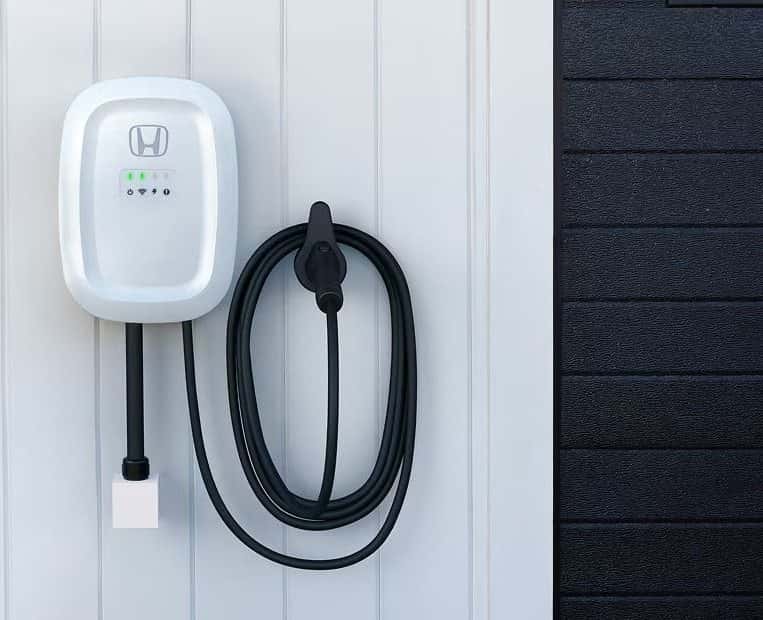
Schedule service online or call 804-424-2024; parts and accessories questions go to the parts department. If a repair keeps the Prologue overnight, ask about loaner availability when booking — the reviews show courtesy vehicles offered routinely for extended repairs, and the department’s shuttle covers shorter West End waits. Charging-cable and home Level 2 charger questions are worth raising at the same visit if you’re still setting up home charging; the service team can point you to Honda’s charger program details even outside a repair appointment.
Frequently asked questions
Does a Honda Prologue need oil changes?
No — there’s no engine, so there’s no oil-change interval. Maintenance instead covers tire rotations, cabin air filter, brake fluid, and periodic checks of the battery/motor coolant system, following the in-vehicle maintenance indicator rather than a fixed mileage chart.
What’s covered under the Prologue’s battery warranty?
The high-voltage battery pack and core EV drive components are covered for 8 years or 100,000 miles, whichever comes first, separate from and in addition to Honda’s standard 3-year/36,000-mile New Vehicle Limited Warranty on the rest of the vehicle.
Does the Prologue being discontinued affect my warranty or parts access?
No. Honda has confirmed that current and future Prologue owners keep full parts availability, full service support, and the complete battery warranty regardless of the model’s 2026 discontinuation. Ownership support doesn’t change when a nameplate stops taking new orders.
Do EVs need brake service less often than gas vehicles?
Generally yes — regenerative braking reduces pad wear over time compared to a similar gas SUV — but it doesn’t eliminate the need for regular inspection, especially with Virginia’s winter road salt in the mix. Treat brake checks as routine, not optional, regardless of powertrain.
Can Honda of Short Pump handle my Virginia state inspection?
Yes, and it pairs naturally with a scheduled service visit. Richmond-area vehicles need only the annual safety inspection; no emissions test applies here, EV or gas.
Do I have to service my Prologue at the dealer to keep the warranty valid?
No — documented maintenance anywhere preserves Honda’s warranty coverage. The case for this shop specifically: Honda-trained technicians, genuine parts, recall and software work handled in the same visit, and evening and Saturday hours that fit a working schedule. Book online and judge a visit for yourself.
The bottom line
A Prologue asks for less routine attention than a gas Honda, but “less” isn’t “none” — tires, brakes, and the coolant loop still need eyes on them, and the in-vehicle indicator is the schedule to trust over any printed chart. The newest Honda service department in Richmond is building its EV track record on the same fundamentals that already earn strong reviews on the rest of its lineup.
All 2026 Honda Prologue guides
- 2026 Honda Prologue: Short Pump Buyers Guide
- 2026 Honda Prologue EX: Short Pump Buyers Guide
- 2026 Honda Prologue Touring: Short Pump Buyers Guide
- 2026 Honda Prologue Elite: Short Pump Buyers Guide
- 2026 Honda Prologue: Short Pump Service & Repair Guide
- 2026 Honda Prologue: Short Pump Pricing & Leasing Guide
Maintenance needs are determined by the vehicle’s in-vehicle maintenance indicator and your selling dealer’s guidance; Honda has not published a fixed Prologue maintenance-mileage schedule as of this writing. Warranty terms summarize Honda’s published programs; your vehicle’s documentation governs. Service offerings, hours, and programs are as described on hondaofshortpumprva.com and may change; confirm when scheduling. Virginia inspection requirements are set by the Commonwealth. Customer quotes are excerpts from public Google reviews of Honda of Short Pump.
